pavilion
Addition to a Private Residence
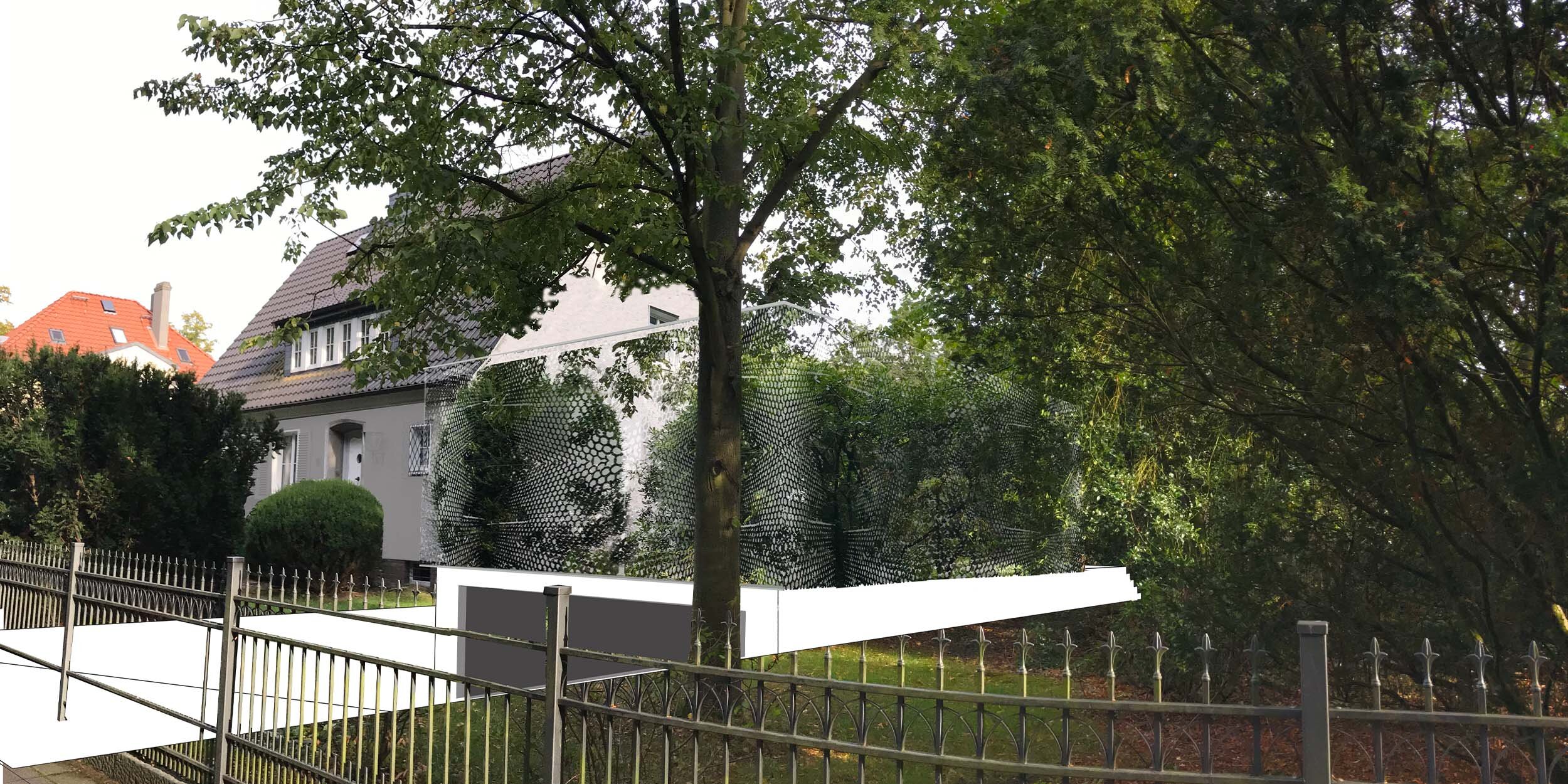
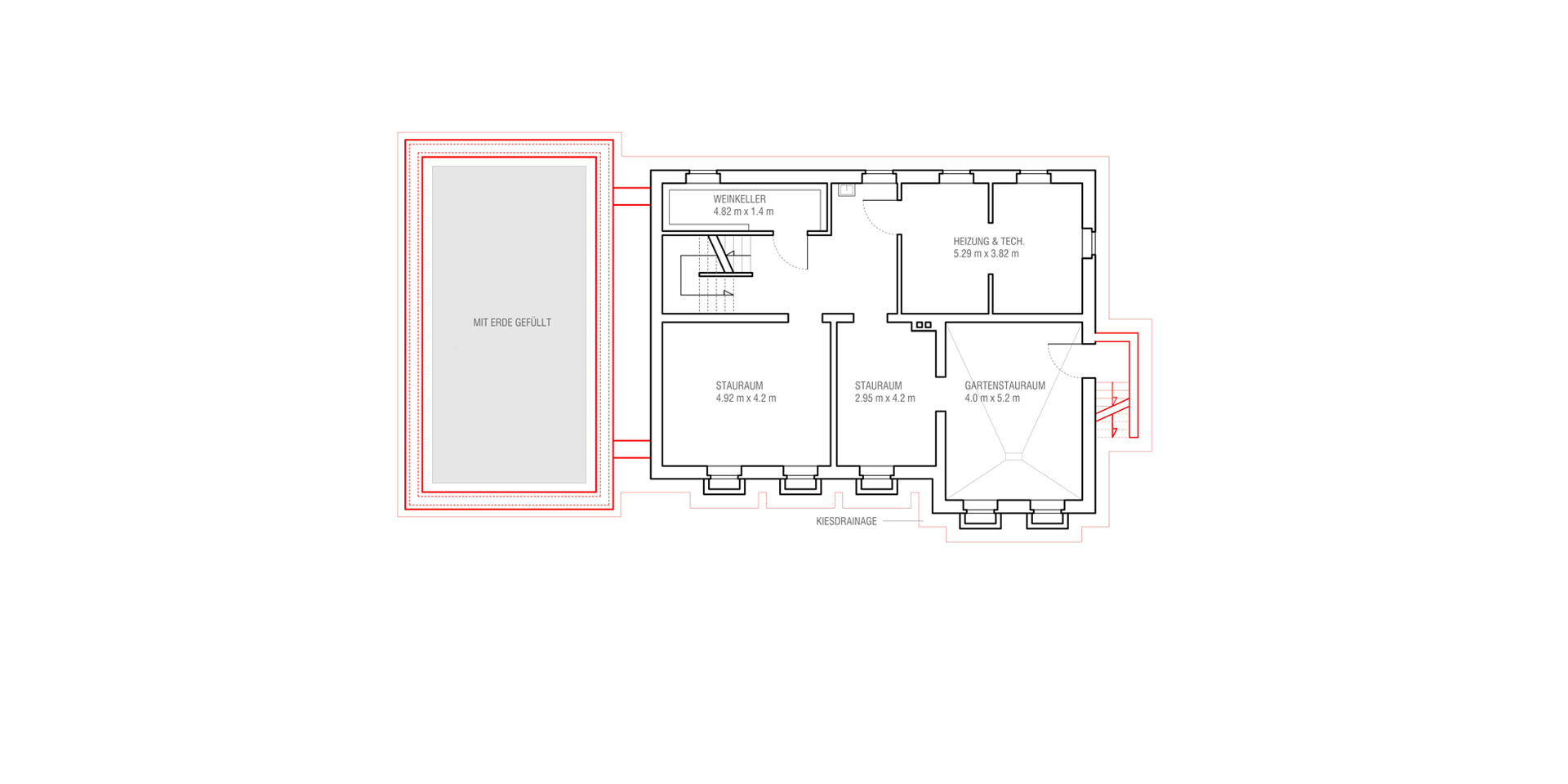
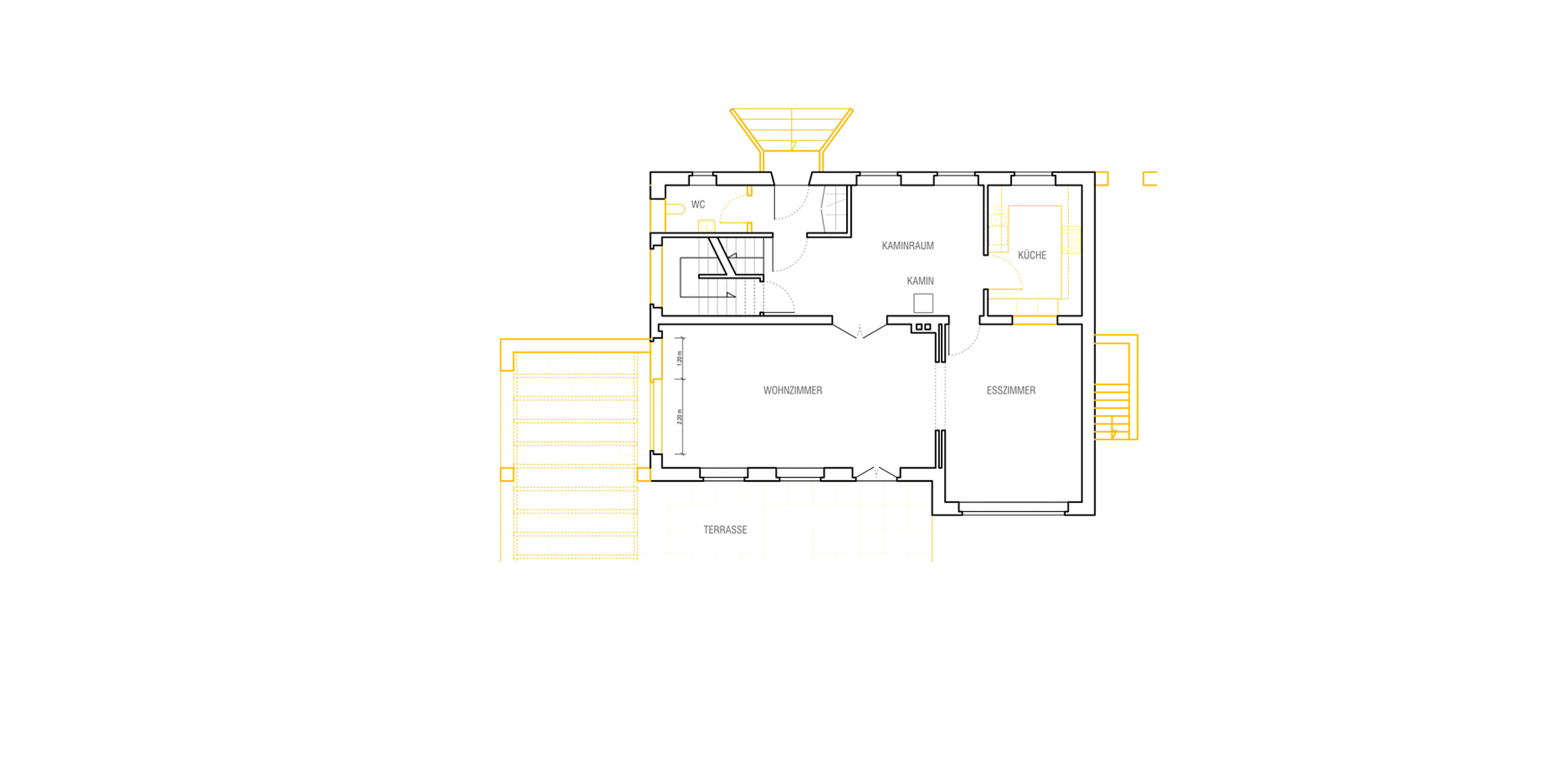
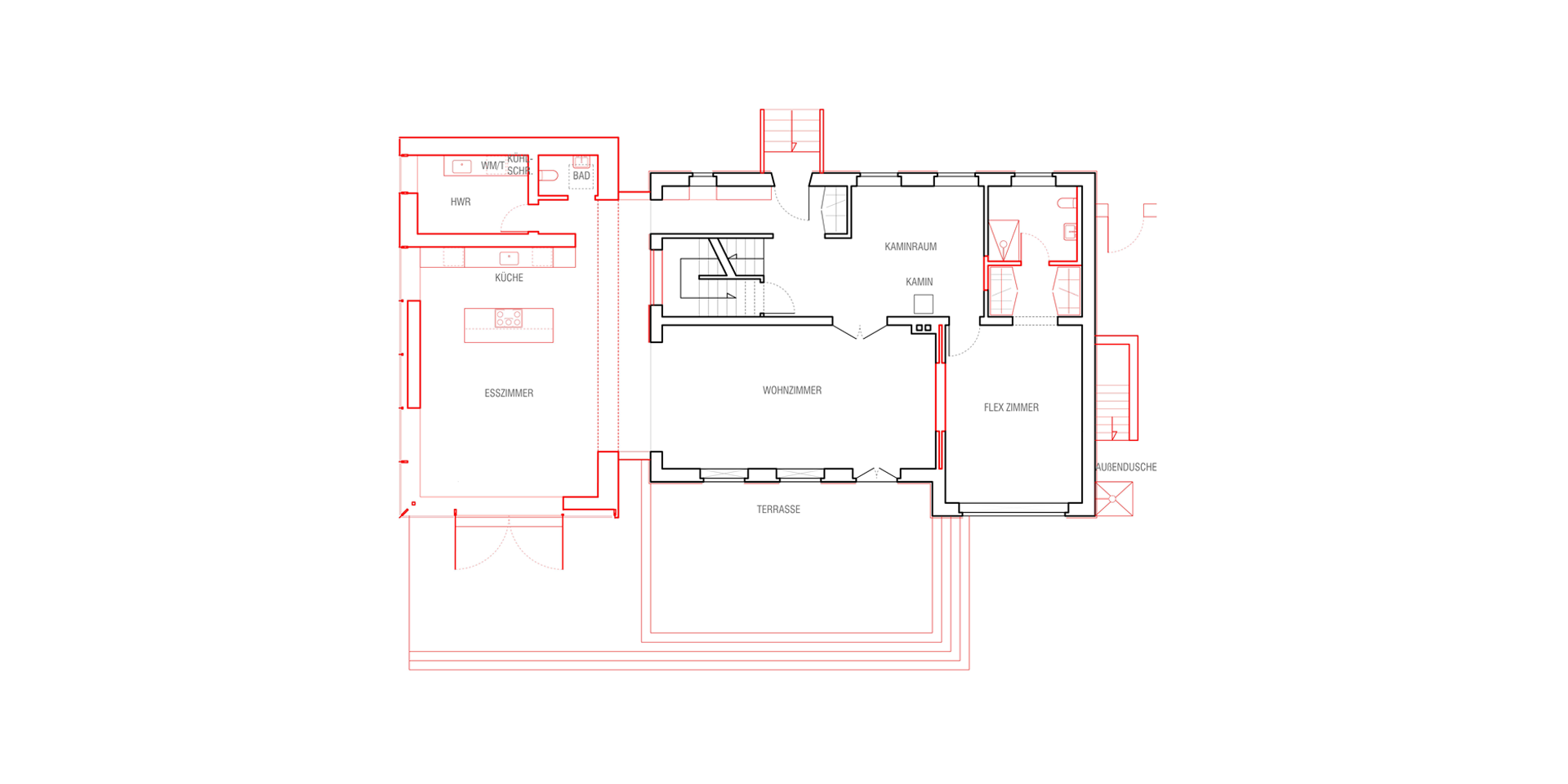
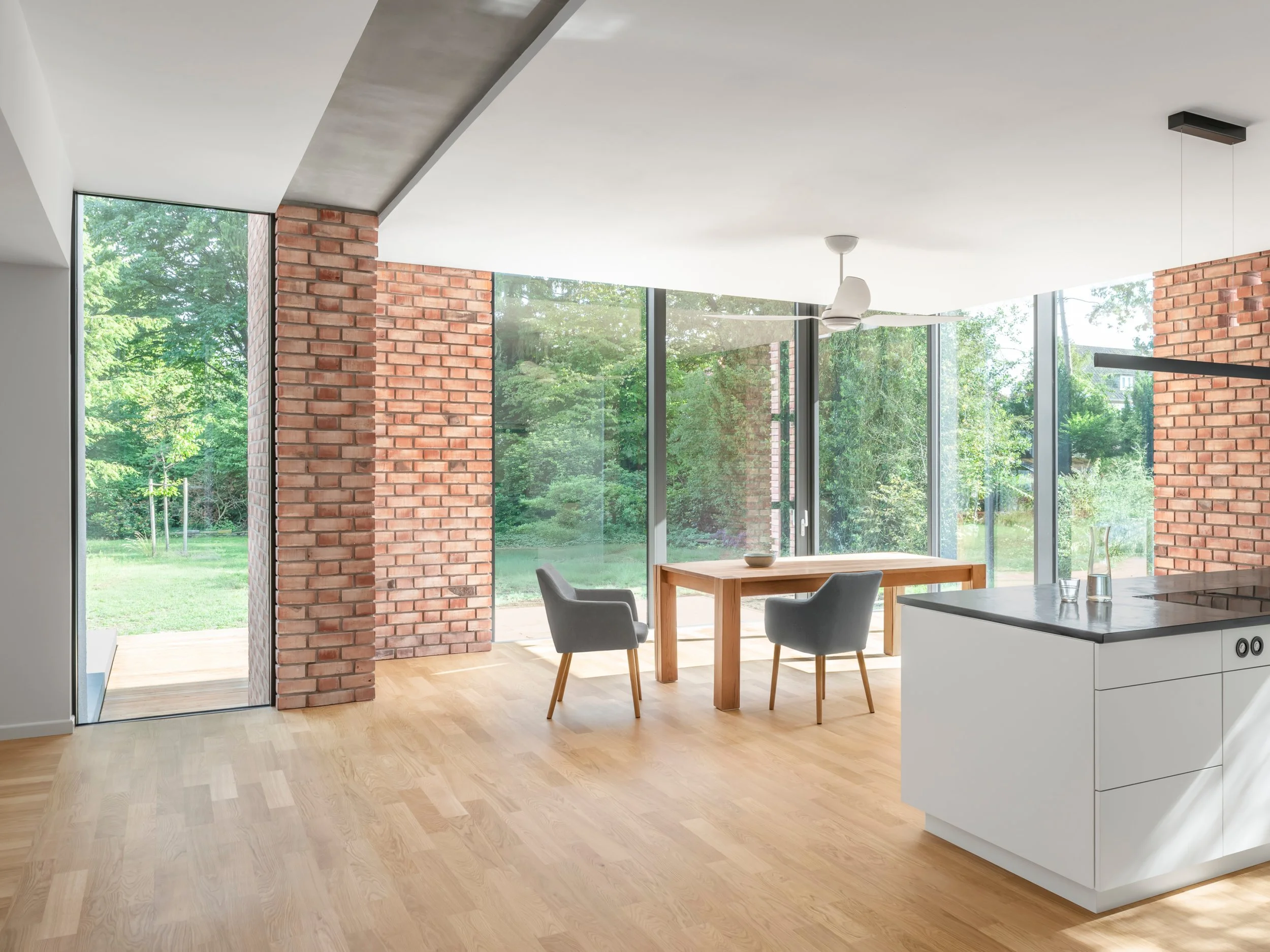
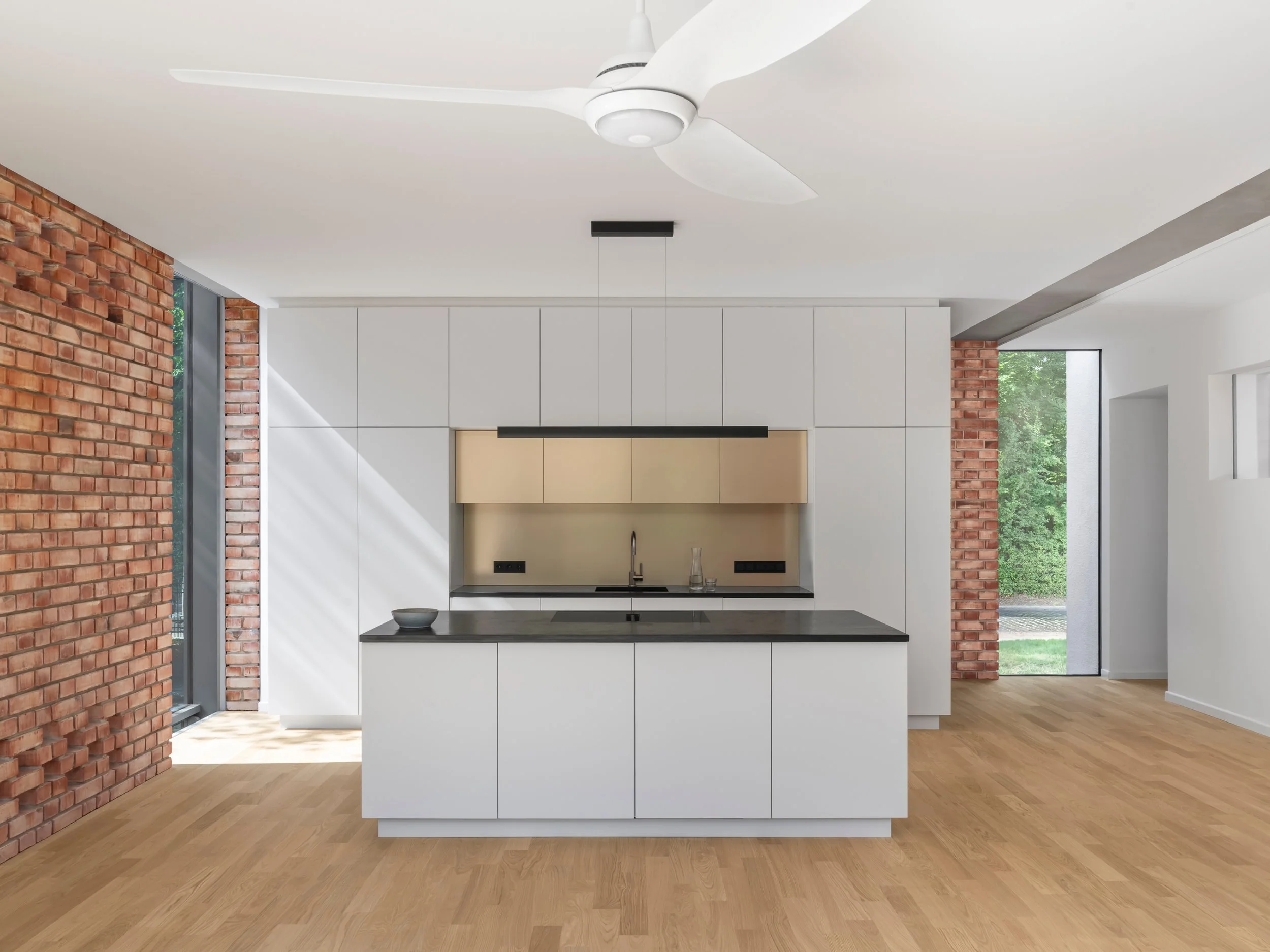
The Pavilion is a light-filled addition to a 1950s single-family home, designed to dissolve the boundary between inside and outside. A former north-facing kitchen and dining room become a flexible ground-floor guest or future owner’s suite, while common spaces move into the new glass pavilion, where floor and roof frame generous views to the garden.
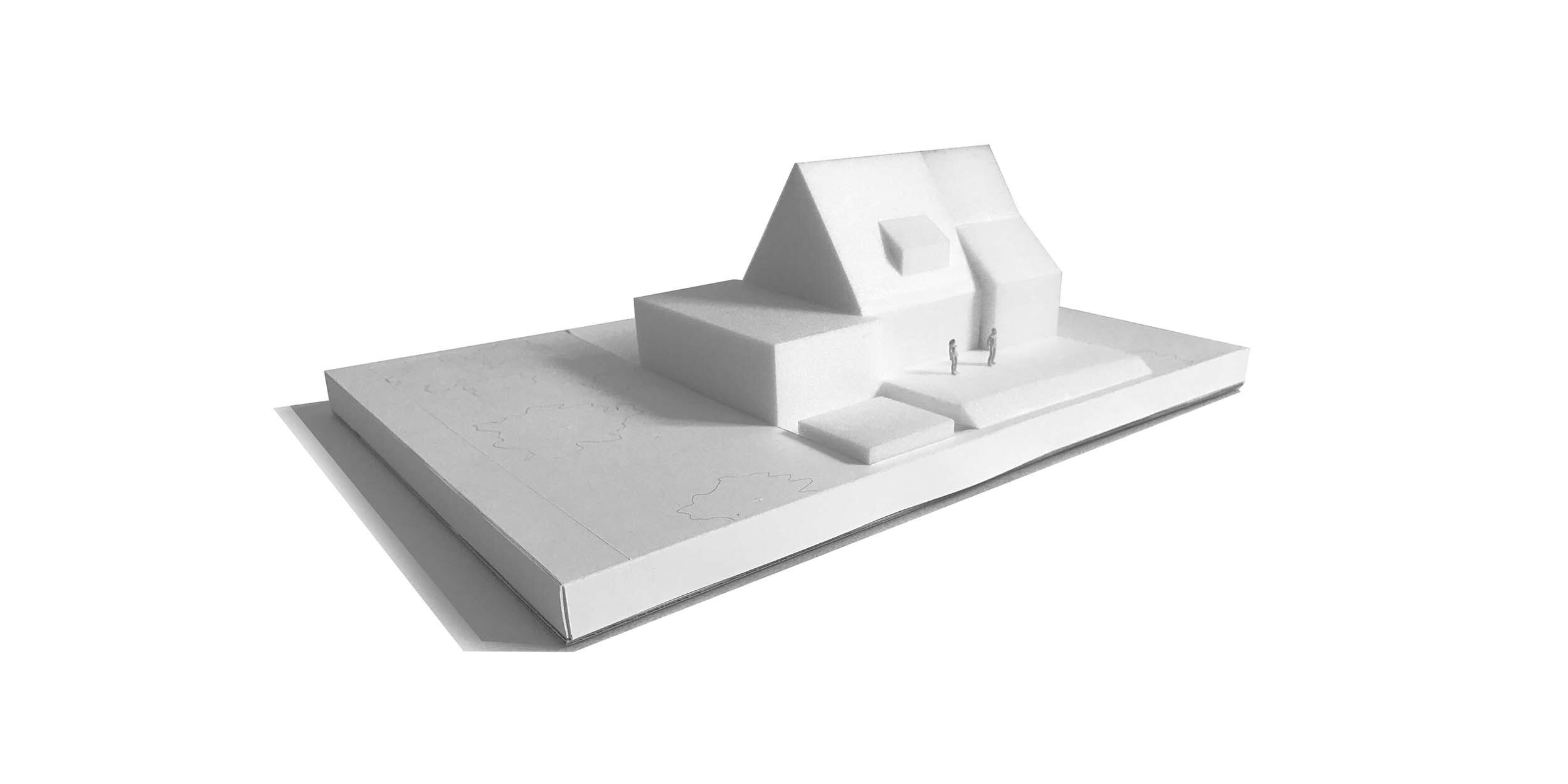
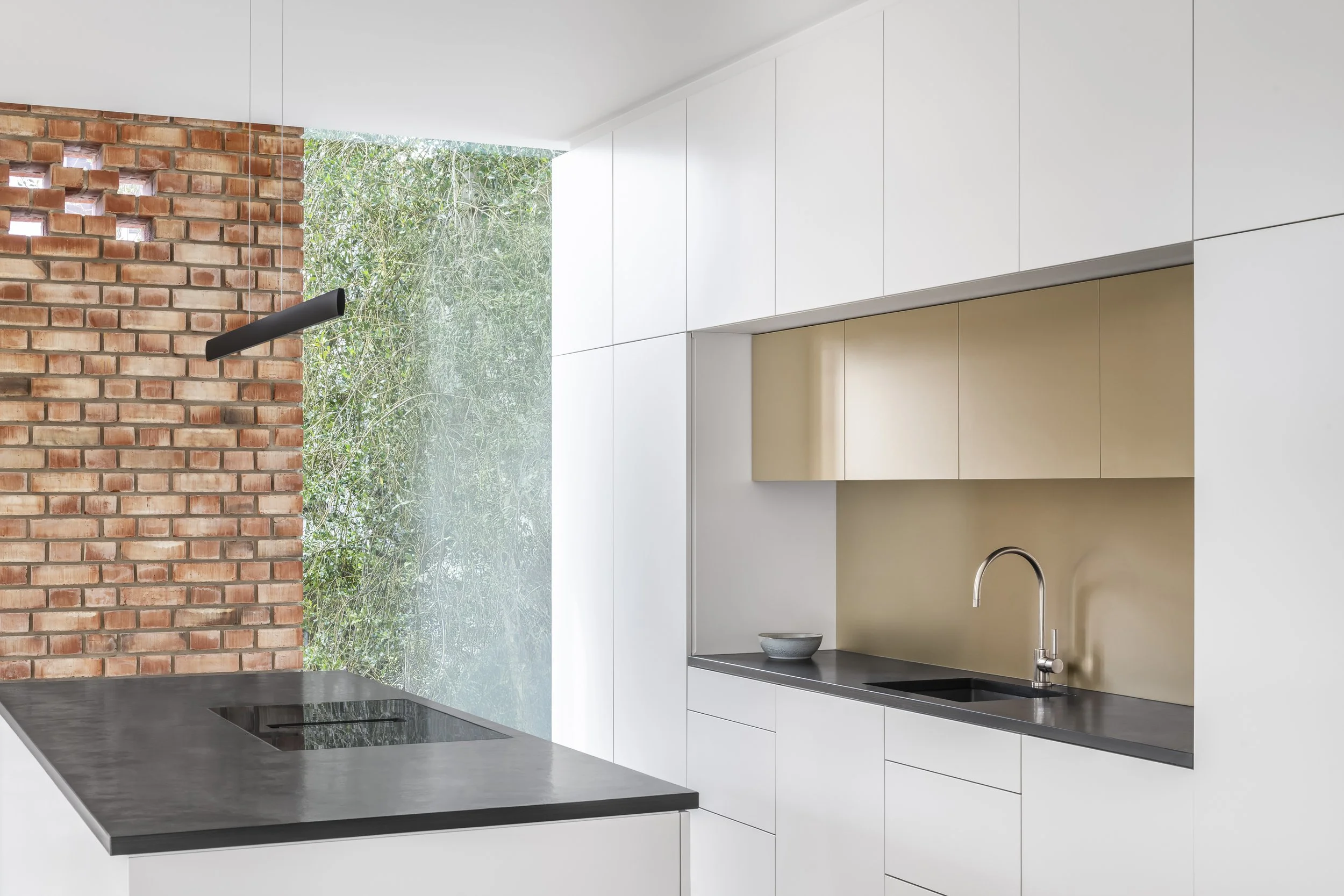
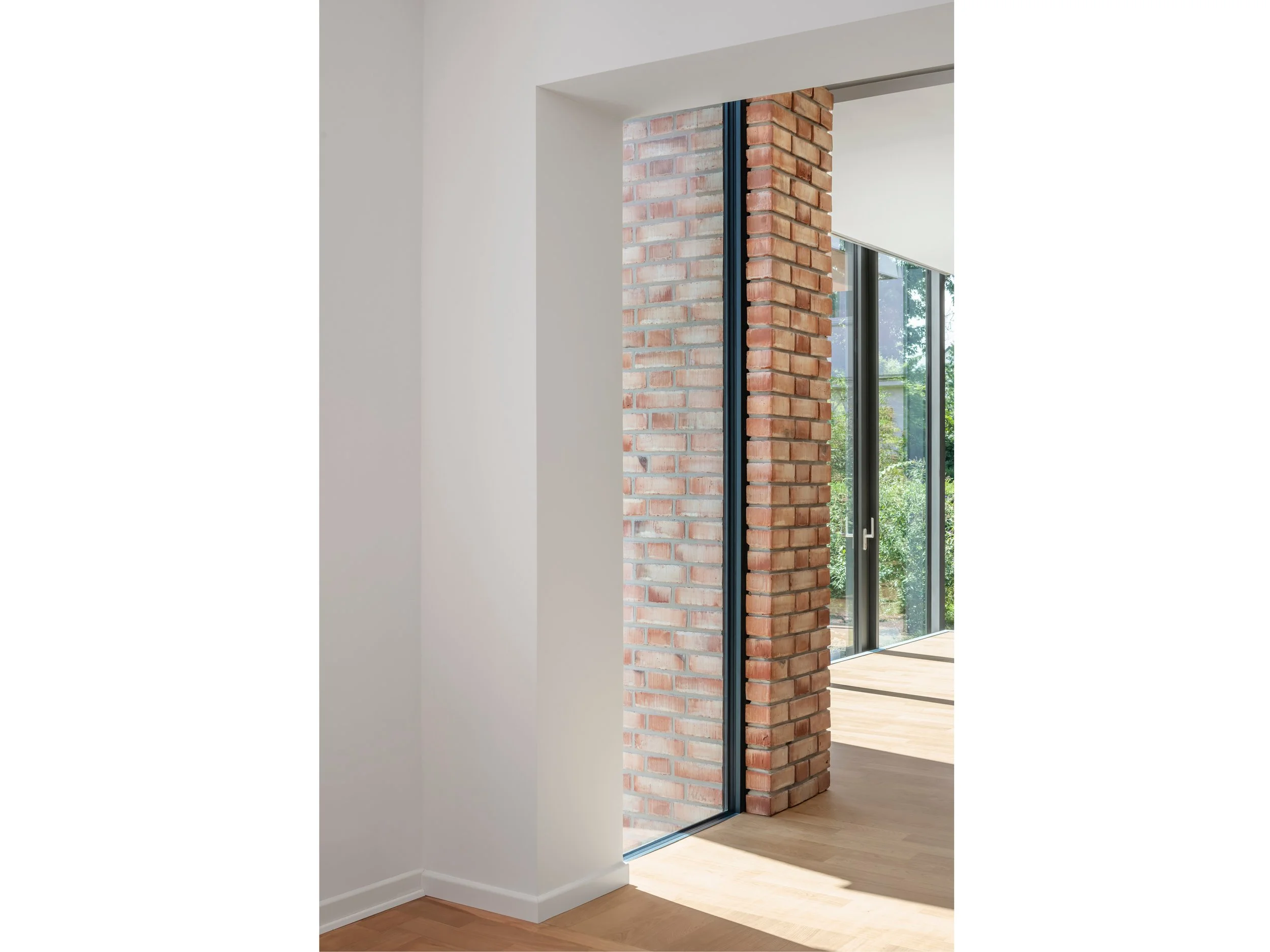
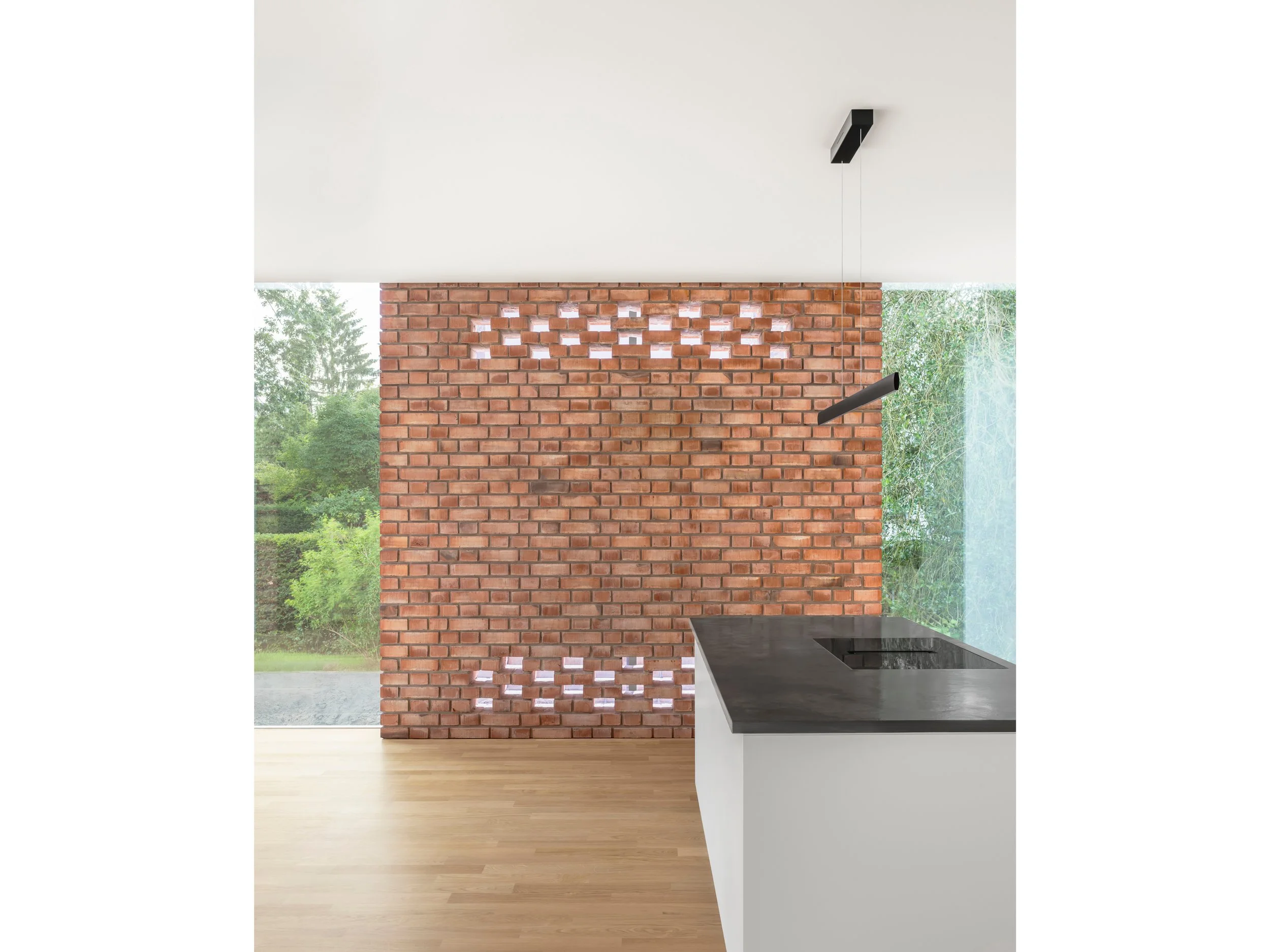
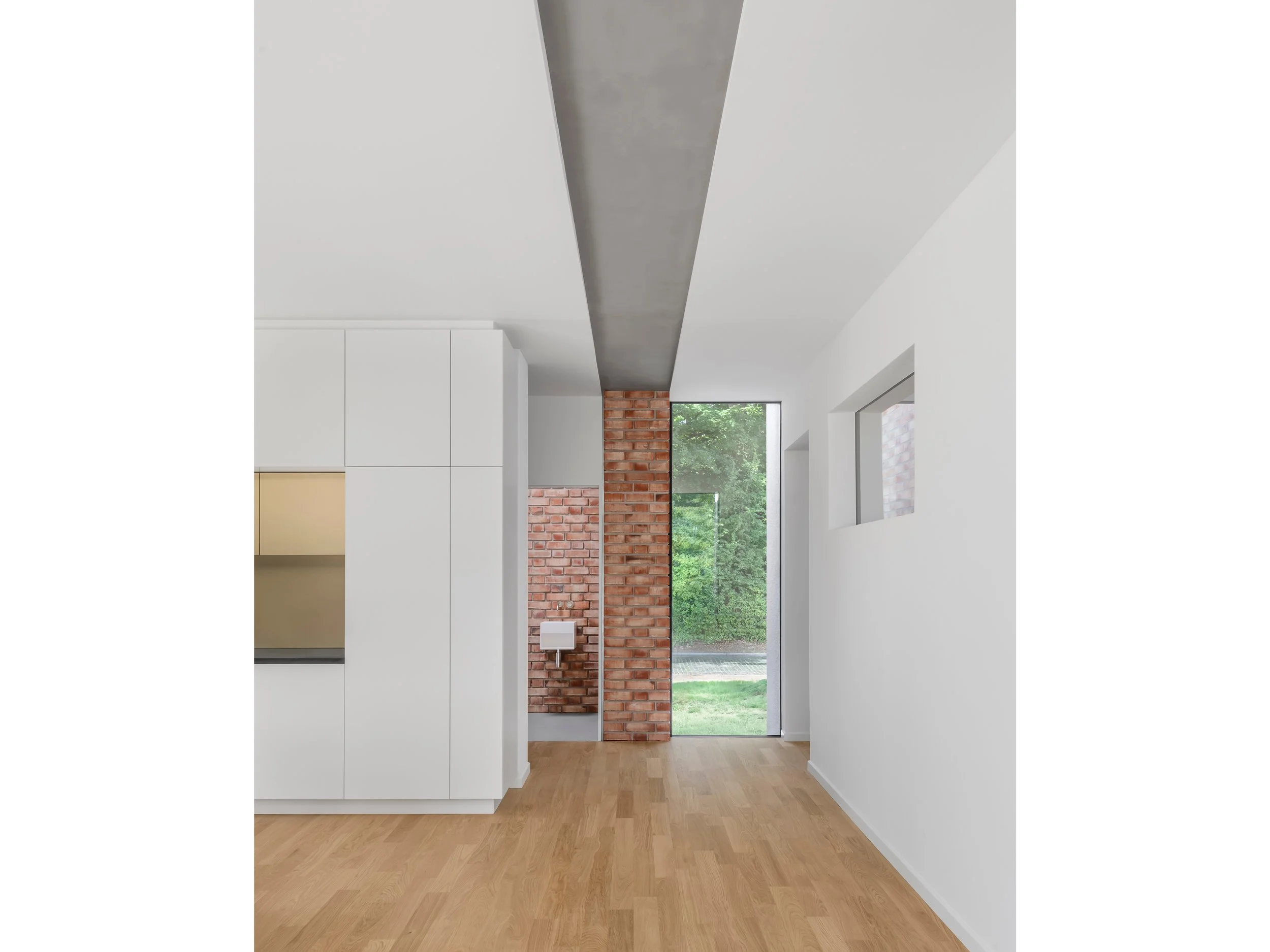
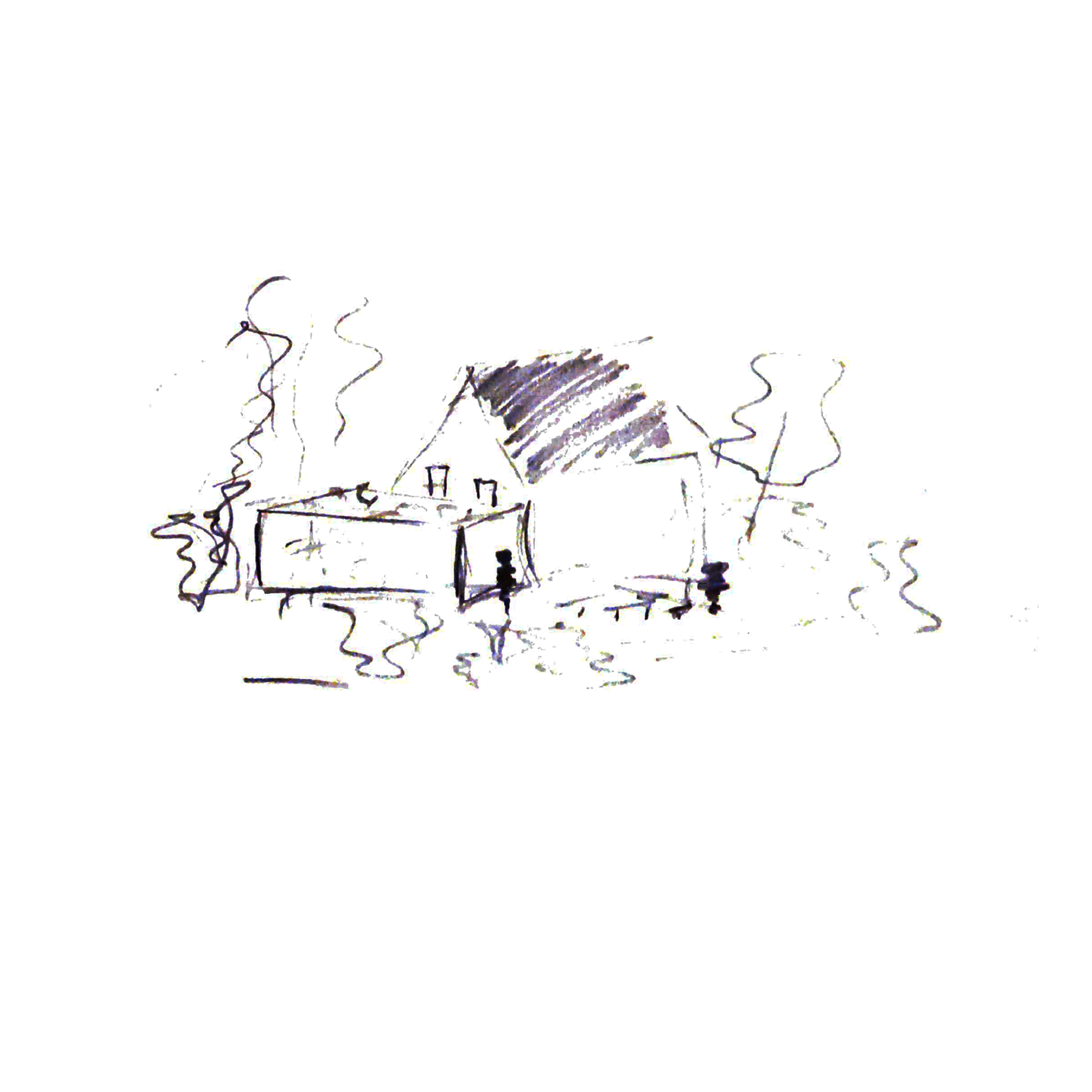
Set back and joined to the existing house by a glass lightwell seam, the Pavilion reads as an independent modern volume. An intentional juxtaposition from the existing structure, belonging more to the garden than the house. Its reflective glass facade and green roof mirror and visually extend the garden and passively heat and cool. Inside, raw brick, precise steel, and warm timber meet in carefully detailed junctions.
Towards the street, a taut opaque brick facade protects privacy, admitting light through a rooftop window into the bathroom. Along the garden edge, this brick box begins to open—first as a single window to the utility room, then as a curtain wall that wraps its perimeter and the brick wall that has slipped behind it.
While aesthetically juxtaposed, the addition adopts and refines the house’s low-tech thermal mass into a Trumbe Wall: a massive brick element paired with high-performance glazing that passively heats and cools the space, turning the glass façade into a climatic asset. Open to the existing structure, the new volume learns from the old, working within the given conditions to preserve rather than demolish.
Location – NI, Germany
Typology – Single Family House Addition, 170 sqm
Client – Private
Status – Completed, 2025
Services – Pre-Design to Construction Administration
Collaborator – Sierra Boaz Cobb and Kirsten Judith Augstein
Photos– Hannes Heitmüller


THE PROCESS.